Thursday, 18 March 2021

CoL - finding my collaborative inquiry partner

In preparation for our CoL meeting this afternoon, I have planned to meet with 5 other CoL teachers who I will chat with about their inquiry focus this year. Here are the teachers I plan to meet with:


I will update my blog with notes after I talk to each of these teachers.


CoL Inquiry 2021: The Challenge of Student Learning

 The last couple of weeks has involved lots of learning about the children in my class and their learning needs. I teach the year 5-8 extension children. Over the last couple of weeks I have:

- Tested the year 5-6 extension children on spelling. Through this, I found there were about 4 children whose needed work on their spelling however spelling was not enough of a challenge for this group of children to spend a whole year on as an inquiry project.

- Tested the year 5-8 extension children on vocabulary. After discussions with deputy principal, Toni Nua, we both agreed that language development was something our extension children needed to work on. We decided to test the children on a PAT vocabulary test to find out more information about this.

Here is the data from the vocabulary test:


*Stanine 5+ is at or above where we would expect the child to be for their year level. 

With the year 5-6 children, at first glance it appeared there was not a challenge as all but one child scored a stanine 5-7. I did however wonder whether I could look into the disparity between what this data showed and why/if we don't seem to see that same level in oral language or written language. From what I know of the year 6 children, having taught them last year and just through observing them in their project we have been working on this year, I would say their oral language is definitely not as high as this. It would be interesting to find out WHY and WHAT I can do to support their oral language development.

Therefore, the challenge of student learning which I am going to look into is this:

There is a disparity between the level of oral language and vocabulary which the year 5-6 extension children use and the level of language and vocabulary they can read and recognise in written texts.


Thursday, 11 March 2021

Novel studies - WHY is this beneficial?

 As mentioned in my previous blog post, I have observed that our year 5 and 6 children are really good at reading short texts that challenge them however many of them find it challenging to focus and be engaged in extended texts at their level which challenge them. There are a few questions I have around this.

- Why do these children find it difficult to engage in extended texts that challenge their thinking when they are good readers?
- How can reading extended texts (novels) excite and develop the learning of these children?
- What programmes have been used in other schools to have novel studies as part of their reading programme?

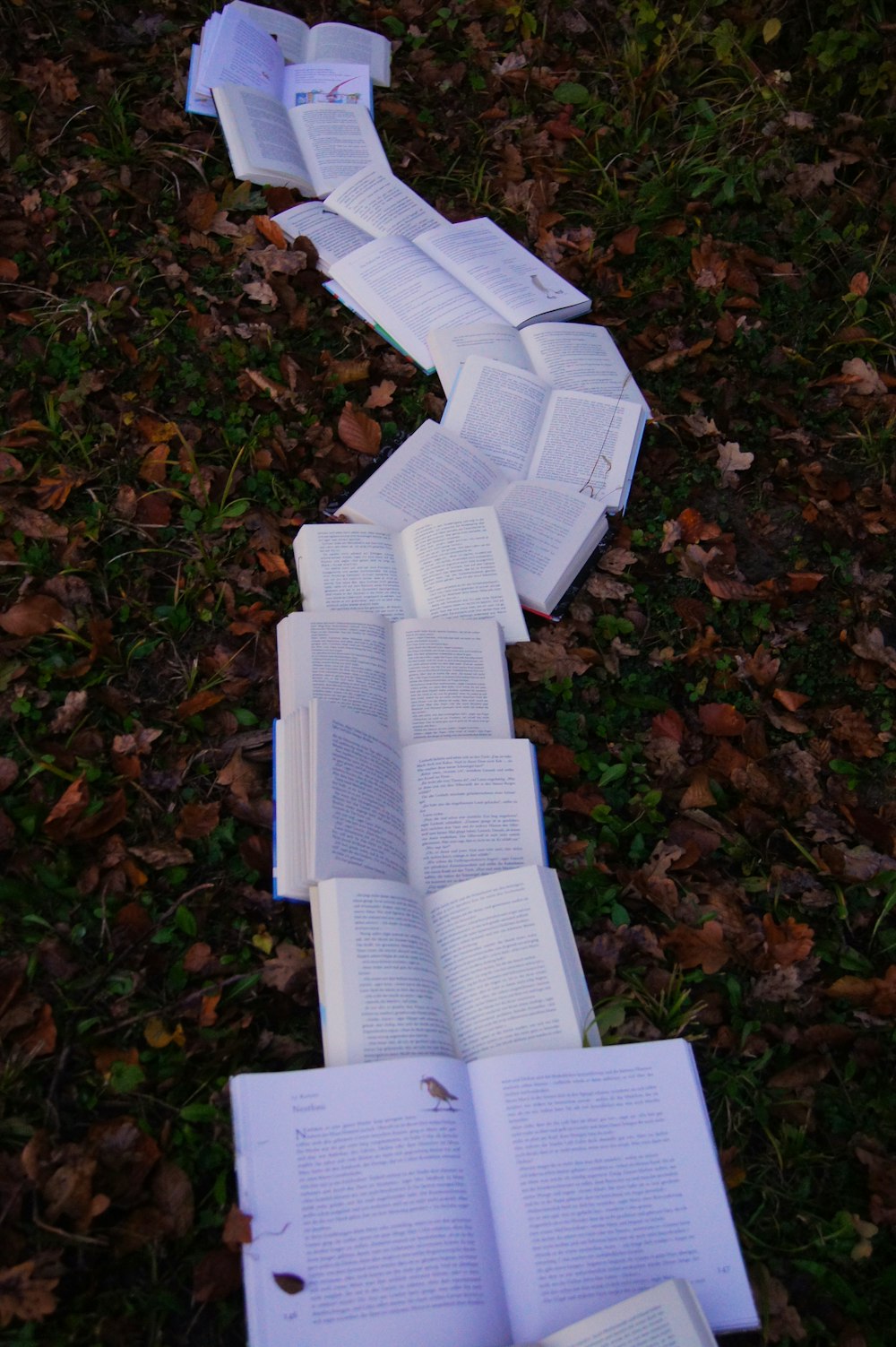
books on ground

To make a start on this inquiry, I first want to gather some student voice around the children's engagement in reading extended text. I am interested in knowing such things as what genre of texts these children enjoy reading, how often they read in their own time (at home) and why they read texts (i.e for enjoyment or to learn new information). 

It will be important for me to understand why I want the children to be reading novels. What will they get out of reading novels?

- One teacher writes about observing children discussing such things as character relationships, viewpoints and inferences (Differentiated Teaching). This teacher goes on to discuss research-based reasons to teach using novels:
1) Giving children experiences that go beyond their own world.
2) Vocabulary development.
3) Communication & Dialogue skills and strategies
4) Social skills development.
5) Engagement

Some books that might suit 10-11 year old children as suggested in The Teaching Bank:
- Number the Stars by Lois Lowry
- Sadako and the 1000 paper planes by Eleanor Coerr
- Esperenza Rising by Pam Munoz Ryan
- Wonder by R.J. Palacio
- Holes by Louis Sachar
- Hoot by Carl Hiaasen
- Bud, not buddy by Christopher Paul Curtis

Some books that might suit 10-11 year old children as suggested in Wheeler books:
- Lion: A long way home (Young Readers' Edition)
- Hidden Figures (Young Readers' Edition)
- Owl

The next step for my inquiry will be to have discussions around this inquiry focus with various people around the school. While I am doing that, I will also gather information around the children's reading habits.

Wednesday, 3 March 2021

Inquiry focus 2021: Initial Data Collection

For my 2021 inquiry this year, I have been thinking about what a challenge is for the year 5 and 6 extension children who I teach twice a week. I am in an interesting position where I do not have my own class of children. My role could perhaps be most likened to how secondary teachers teach multiple groups of children each week. I believe that the year 5/6 group would be the most appropriate group to base my inqury on as I see them twice a week. As a result, I would have more of a chance to implement a regular pedagogical approach with them. 

I asked myself this: What do the extension children have as a challenge/ something they need to work on which I could inquire into?  Alternatively: Is there something totally different which could be beneficial for me to focus on in my unique role?

I have come from teaching year 5 children. As a result, I can draw upon observations and knowledge of some of the children who would be my focus for this inquiry. I have observed that some children in year 5 who read above their chronological age in reading have some difficulty with spelling. Therefore, I was wondering whether a focus on spelling with these children could be beneficial. I tested the group of children and came up with some data.

Test 1: Schonell Spelling Test

Data:

Interestingly, only 4 out of 17 children have spelling as an area of concern according to the Schonell test I gave them.

As a result, I decided that spelling was necessary to focus on for those 4 children whose spelling level did not reciprocate their strong reading levels however, it was not an area that I needed to focus on for the whole group for the year. 

I had a conversation with Angela Moala, the year 3/4 team leader. We used to co-teach in a year 5 space and do well with putting ideas past each other. Through this conversation, I mentioned another observation I have made whilst teaching year 5 children who are strong readers. This observation was seen when I gave a group of 4 year 5 boys a novel to read. We had built up this novel and the children were all excited to read it. However, when it came to reading the book, only 2 were engaged to read it independently from start to finish. In my conversation with Angela, we realised this is a real challenge for this particular group of children. They are very good at reading short texts at their level however they do not all show an ability to focus on reading an extended texts independently. 

My second idea for my inquiry is therefore, how can I support extension children in year 5 & 6 to be engaged in extended texts which are challenging and which encourage critical thinking. How can I get the children to engage in deep and thoughtful conversations about these extended texts which they read?

I am going to spend this week exploring this second inquiry idea.

Thursday, 11 February 2021

What's in store for 2021??

2021 is going to be a different year for me at Pt England School. I have taken over as the Creative Space and Extension Teacher. In this role, I will be producing the school news, PENN, every Monday to Thursday, taking children from year 1 to 6 for lessons in the creative space and teaching the year 5-8 extension children. With this change in role will come a change in inquiry focus. 

So far this year I have had a clear out and made sense of what gear I have to utilise around the school. I have created three episodes so far for the school news (PENN) and taught three days of classes.

Creative space lessons this year are going to be broken up into Sight, sound and motion. 

- Term 1: Focus on Sight
- Term 2: Focus on Sound
- Term 3&4: Focus on Motion

This term, the creative medium we are using is photography. For years 2 and 3, photos will be taken using the camera on their iPads and will include a focus on digital fluency. For years 4-6, photos will be taken using digital cameras. Part of the planning for these sessions has included me figuring out the progressions between year levels, which has come about from the progressions in the digital curriculum and my knowledge of children in year 5 & 6 and what they would be capable of achieving.

With having had three days with the children in front of me, and with the term well under way, I am now in a position to think about what my inquiry focus should be this year. To make this decision, I need to consider what is going to benefit me in this new role, what is going to benefit the children and what other teachers can learn from and implement themselves.

Here are some of the ideas I have had so far:

- Do I focus on the Extension children OR children participating in the Creative space programme OR children in the PENN (news) crew?
- Do I focus or compare engagement (or key competencies) between creative space and in class?
- Do I focus on progression of learning through the years using various creative elements?
- Do I focus on how participating in the school news supports reading level?
- Do I focus on how participation and engagement in the creative space impacts class engagement?
- Do I continue to focus on critical thinking with the extension children?

There are many questions I have regarding what my inquiry should be this year. I now need to have conversations with a number of people to decide what is most important to focus on.

Wednesday, 9 December 2020

End of Year Data Collection

My hypothesis was:

A focus on critical thinking and causal reasoning when responding to texts will support increased levels of critical thinking and ability to create causal links in online written interactions with others for year 5 children reading between 10 and 12 years.

After implementing use of Peter Worley's framework, The Concept Box, into reading lessons, I collected data to compare with the data I collected at the beginning of the year. Graphs from the beginning of the year are also in these slides to make comparisons.

Wednesday, 2 December 2020

Critical Thinking in a Digital and Creative Environment

Below are a number of resources which I found particularly useful around teaching critical thinking. The coral coloured boxes look at critical thinking in general, where as the blue boxes share links to articles making a connection between critical thinking in a digital/creative environment. 

Edutopia

Getting critical about critical thinking

Inside Higher Ed

It’s time to get serious about critical thinking

Digital Learning Collaborative

Using technology to teach critical thinking skills

Wabisabi Learning

8 Classroom Edtech Strategies That Develop Critical Thinking Skills

Technology Online

Creativity, critical thinking, and problem solving in digital technologies

JotForm Education

How to use technology to foster higher-thinking skills in class