Showing posts with label literacy. Show all posts

Wednesday, 7 May 2025

Inquiry focus for 2025

 Core Learning Area: Literacy

Focus Group: The group of students I am focussing on this year are Year 5-8 students who have been assessed as being strong academically in their year group, however who are behind their expected level in reading and/or writing.

Evidence:


You can see from this data that there are a high proportion of these students working below their expected year level in Reading or Writing in Year 5, 6 7 and 8.

Observations and Initial Questions:

From this group of students, there are some students who are extremely capable with using their reading and writing capabilities to access the curriculum and share their learning. There are also students in both classes who find the learning more challenging, either because they find it difficult to ‘read to learn’ or they find it difficult to share their learning or express their thoughts through writing.

For every child in this group that has a lower than expected reading age, their PAT Reading and/or Vocabulary levels were a lot stronger. Why is this? Is the issue with how these students are testing?

Does lack of ability to complete their work and manage their time have a correlation to reading or writing level?

Does reading and/or writing level have a correlation with language acquisition or oral language capabilities?

How I might verify this defined problem:

  • Performance in most current testing
  • Observations of classroom behaviours
  • Language Acquisition
Draft Inquiry Focus:

How can I support students in Year 5 to 8 who have been tracked as being strong academically compared to their year-level peers, however who are working ‘below’ expectations for literacy levels (reading &/or writing).

Possible Research/ Resources:

Sheena Cameron Reading and Writing books
Literacy Learning Progressions
Revised English Curriculum Progressions
Research looking into the correlation of input (reading/listening) and output (writing/ speaking)

Possible Strategies:

  • Think-Peer-Share. Pairing children up so they are working with a peer who is stronger in that area.
  • Converstaion Starters/ Sentence Starter prompts
  • Shorter activities which really focus in on building individual student needs (e.g. challenged more with input or output)
Next Steps:

  • Provocations
  • Integrated projects
  • 1:1 readings or writing with individuals who need more support (including extra activities targeted at individual needs)
  • Strong focus on reading and writing in extension classes.

Thursday, 13 May 2021

Collaborative Inquiry Group

Today at staff meeting we met in three groups:

- Those with a focus group of children who learning to read.
- Those with a focus group of children who are reading to learn.
- Those with an inquiry focus on maths.

I went along to the group of people who were focussed on those children who are reading to learn, as this covers my focus group of children. Our group was led by our Principal, Russell Burt. Others in the collaborative group were:

Gabriel Hughes - Year 5/6
Kelsey Parrant - Year 5
Latini Ilaoa - Year 7/8
Sally Va'afusuaga - Sport
Jenni Clarke - Reading Support
Migi Siō - Year 4/5
Adina Iordache - Year 4

Through discussions around my inquiry, we came to identify that my focus group have an output mileage problem. That is, the children are not being given enough opportunities to practice 'output' through speaking and presenting.

Through discussions around other people's inquiries, I identified areas that could be useful to explore such as teaching understanding around lexical chunks rather than individual words as well us looking into pragmatics of oral language, being the way we interact socially with one another. More can be read about pragmatics here.

I found this collaborative inquiry session really valuable in terms of supporting one another, making links between different groups of children at different levels and sharing knowledge.

Friday, 23 April 2021

Manaiakalani Teacher Only Day

 Last Friday, we had a Manaiakalani Teacher Only Day with a focus on literacy. We had a fantastic keynote presentation by Dr Rae Si'ilata. During the day, we also went to 3 workshops run by teachers in our schools. I took a workshop on my inquiry from last year, where I researched, used and adapted Peter Worley's Concept Box Framework into my teaching to support development of critical thinking.

Here are the slides from my workshop:

Wednesday, 3 March 2021

Inquiry focus 2021: Initial Data Collection

For my 2021 inquiry this year, I have been thinking about what a challenge is for the year 5 and 6 extension children who I teach twice a week. I am in an interesting position where I do not have my own class of children. My role could perhaps be most likened to how secondary teachers teach multiple groups of children each week. I believe that the year 5/6 group would be the most appropriate group to base my inqury on as I see them twice a week. As a result, I would have more of a chance to implement a regular pedagogical approach with them. 

I asked myself this: What do the extension children have as a challenge/ something they need to work on which I could inquire into?  Alternatively: Is there something totally different which could be beneficial for me to focus on in my unique role?

I have come from teaching year 5 children. As a result, I can draw upon observations and knowledge of some of the children who would be my focus for this inquiry. I have observed that some children in year 5 who read above their chronological age in reading have some difficulty with spelling. Therefore, I was wondering whether a focus on spelling with these children could be beneficial. I tested the group of children and came up with some data.

Test 1: Schonell Spelling Test

Data:

Interestingly, only 4 out of 17 children have spelling as an area of concern according to the Schonell test I gave them.

As a result, I decided that spelling was necessary to focus on for those 4 children whose spelling level did not reciprocate their strong reading levels however, it was not an area that I needed to focus on for the whole group for the year. 

I had a conversation with Angela Moala, the year 3/4 team leader. We used to co-teach in a year 5 space and do well with putting ideas past each other. Through this conversation, I mentioned another observation I have made whilst teaching year 5 children who are strong readers. This observation was seen when I gave a group of 4 year 5 boys a novel to read. We had built up this novel and the children were all excited to read it. However, when it came to reading the book, only 2 were engaged to read it independently from start to finish. In my conversation with Angela, we realised this is a real challenge for this particular group of children. They are very good at reading short texts at their level however they do not all show an ability to focus on reading an extended texts independently. 

My second idea for my inquiry is therefore, how can I support extension children in year 5 & 6 to be engaged in extended texts which are challenging and which encourage critical thinking. How can I get the children to engage in deep and thoughtful conversations about these extended texts which they read?

I am going to spend this week exploring this second inquiry idea.

Thursday, 22 October 2020

The Concept Box: Session 4

Story: The Promise-Slippers (page 123-130, Once upon an if (Peter Worley)

The Concept Box (Peter Worley) allows the children to begin thinking superficially and then scaffolds them into thinking deeper and deeper. I like to think of this not just like digging a hole, but like what you would find under a single ant hole - many intricate tunnels and mazes which may at first glance not seem meaningful to us, but which mean a lot to the colony of ants living there. On a trip to the UK several years ago, I visited the Chislehurst Caves in Kent. These caves are 30 metres under the town of Chistlehurst and date back as far as the years 1250-1274! If you were to just walk through the town of Chistlehurst, you would not even realise what was below the surface, however some people who were interested in what went below the surface have now found the caves which cover more than 6 hectares of land and have an incredibly rich history. They were even used as a sheltered city (with a chapel, hospital and accommodation) during WWII! We want our children to not just explore the 'town', but find the caves and cities which have been built below!

File:Shackleford Horse Digging Well.jpg

Chris Capeheart, CC BY-SA 2.0 <https://creativecommons.org/licenses/by-sa/2.0>, via Wikimedia Commons

Comprehension Stage: This stage of the Concept Box allows the children to discuss the text openly.

Here are some of the responses from the children:

- Why did the guy want someone to marry the son in 10 years? Why did he pick her, not another girl?
- The story is strange
- This is a narrative/ a myth. Answer(from another child): So it's fake?
- Is this real?
- It is fake because there are elves and warewolves.
- How would the girl have fit inside the tree? - The elf had a lot of stuff so needed a big tree.

The conversion kept going off in multiple directions - multiple conversations at once - and I had to keep pulling the children back to the one conversation. The discussions I heard tended to be about the superficial elements of the story (strange, elves, warewolves, size of the tree) and the children did not show evidence of being able to independently think deeper about the text. The only place where the children were close to doing this was when one child asked if the text was real or fake, however the responses to this were not thoughtful or deep (example, "It is fake because there are elves and warewolves").

Concept Fishing: This stage scaffolds the children to begin thinking more critically about the text.

What was the text about/ the moral?

Responses from the children:

- Always keep your promise
- If you don't keep your promise, bad things will happen - karma
- It was the slippers that made her have to keep the promise.
- Don't rely on objects - you don't need promise slippers to keep a promise.
- He's saying you don't need shoes to keep a promise.

Words shared:

- Decision
- Mythical
- Random
- Cringe
- Promise
- Relying/ reliable
- Focus
- Rough
- Mature/ maturity
- Neutral
- Magical
- Choices
- Opportunity
- Gullible
- Kindness
- Morals
- Values


From these responses, it can be seen that with scaffolding, the children were able to begin thinking deeper/ more critically about the text. However, when children had to narrow down the meaning of the text to one word, it can be seen that some children are still challenged with this concept of thinking more deeply (see responses such as, 'random', 'cringe', 'rough', 'magical'. Others, however, really begin to grasp the concept of thinking more deeply/critically (see responses such as, 'decision', 'relying', 'maturity', 'choices'.

It can also be seen that the process of the Concept Box really supports development of children's vocabulary. Vocabulary and Critically thinking come hand in hand.

Concept Funnelling: Narrow down the words to just 5 - supporting children to really think about which words best describe the situation in the text.

Decisions
Relying/reliable
Mature/maturity
Opportunity
Morals

Explore central concepts: Arguing for/against one of these words

Children's responses:

She had decisions to make.
I agree...decisions plays a big part of the story.
It wasn't her making the decisions but the slippers.
She was not forced to do it. She didn't have to wear the slippers. She could have said no.

Teacher: introduced the word, influence.

Wednesday, 23 September 2020

Student Voice: The Concept Box (Worley)

Today I gathered some student voice data in a google form about learning using 'The Concept Box' by Peter Worley. Below are the results from this. I have highlighted key words that were mentioned.

1. Explain what you have to do in this type of learning.

Key words from responses:
- Learn
- Words [Vocabulary]
- Making sense [Comprehension]
- Describe, explain
- Talk [Converse/Discuss]
- Think

2. How does this way of learning help you?

Key words from responses:
- Learn
- Words [Vocabulary]
- Listen
- Describe
- Understand [Comprehension]
- Deeper thinking [Critical thinking]

3. What do you get out of this way of learning? (Tick boxes)

Most popular responses:

- Introduced to new words (5/5 responses)
- Summarising - explaining the ideas in a text using a small number of words (5/5 responses)
- Adding more detail to my or others ideas (4/5 responses)
- Confidence (4/5 responses)
- Sharing ideas (4/5 responses)

What might this mean?

The children are implicitly aware that they are critically thinking. This is clear through the children's responses to their thoughts around the process of learning using 'The Concept Box' (Worley). Responses which include the concept of having to listen, explain, learn new vocabulary, making sense and thinking deeper suggest they are aware they are learning to think critically.

This is really positive for going forward with a focus on critical thinking. The next step will be to analyse the children's online blog posts and/or comments to see if this level of critical thinking is also visible in their online blogging. I then need to ask the question as to why or why not it is present in their online blogging. 

Wednesday, 16 September 2020

The Concept Box - Session 3

Text: The Patience of Trees (Once upon an If, by Peter Worley, page 118-122).

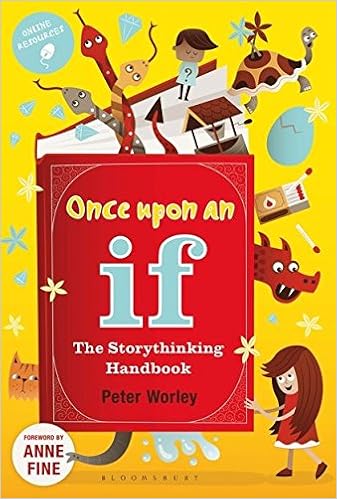
Once Upon an If: The Storythinking Handbook: Peter Worley: Bloomsbury  Education

During the free speech section of the comprehension stage of 'The Concept Box,' the children talked about freedom to do things. River - a statement was made about the river not being able to choose when to do things - Is this freedom?

During concept fishing, these words were brainstormed regarding the story:

Control
Weather
Determination
Freedom
Unfair
Happiness
Jealous
Wisdom
Mather-nature
Believing
Possibilities
Problems
Wishing
Movement
Gust
Friendship
Ability
First step
Misfortune
Courage
Confidence
Strength

During concept funnelling, the children reduced these words to the following words:

- Control - this was removed because they can't control themselves. It goes with freedom. The ones who were 'free' also were being controlled. What does this mean?
- Happiness
- Friendship
- Ability- isn't this a bit like control and freedom?
- Courage
- Confidence
- Strength - get rid of
- Determination - because little tree tried to get out when he had no hydration. Should be cut as was only in one part of the story.

Finally, as the children explored central concepts, the narrowed the above words down to these final words. Note: They added 'control' back in. A lot of the discussion revolved around the face that the characters in the story who appeared to have freedom were in fact being controlled. The word 'potential' was also added in to summarise a number of the words decided upon during concept funnelling.

- Control-freedom
- Potential (decided that covered ability, courage, confidence, determination)

The Concept Box - Session 2

Text: Matilda, the Fireless Dragon (Once upon an If, by Peter Worley, page 92).

Once Upon an If: The Storythinking Handbook: Peter Worley: Bloomsbury  Education

In today's session of 'The Concept Box' by Peter Worley, these are the words the children reached during the concept funnelling time. For some words, I have made notes with children's responses, comments or arguments.
 
Bravery - dragon was brave to fight the water monster. King was brave to ask dragon to help. I don't think he was brave to fight the monster. Dragon tricked the water monster. The princess was the brave one as she went to the dragon in the first place.
Stereotype - plays a big part in the story. Dragon didn't breathe fire but villagers believed he did.
Manipulation - I would say trick. | But trick is like manipulation.
Ignorant -
Slay
Annoying - not part of the story. | Only describes a character. |

During the exploration of central concepts, one of the children added in the word, 'unique.' His explanation for this was that she (the dragon) was unique because she didn't breathe fire. Also, the werewolf didn't have teeth so was also unique. Unique is like a stereotype. The children discussed how they are opposite.

Through doing a 'Concept Box' session once a week, I am noticing that the children are extremely capable of thinking for themselves and pulling deeper ideas and concepts out of the texts they read independent of the teacher. This is really positive as I develop the learning programme for these children who are reading to learn.

Tuesday, 2 April 2019

April Fools! - A perfect opportunity to teach children to be critical online!

Kāhui Ako Achievement Challenge 5: Improve the achievement of students with additional needs in the learning areas of English/ key competency using symbols, languages and texts.

My Inquiry Problem/ Challenge: Children living in a digital world, where key competencies are essential, require ubiquitous access to cybersmart scaffolds and resources which are not currently available.

Can we trust everything that is online? NO!! That seems like such an obvious answer to us as adults but is it that obvious to children? 

Every morning, my class explores kiwikids news. We scroll through the headlines and the children get to choose a couple of articles to read as a class. Today, I stumbled across this news article. I knew straight away that this was an April Fools prank, but I wanted to see how the children responded as I read the article aloud to them.


The first half of the article seemed pretty reasonable and used language which didn't cause any suspicion. It wasn't until I began to read the paragraph which said that the reason for daylight saving being changed was to support the Prime Minister with her young child's sleeping patterns that a couple of children started giving each other puzzled looks. Some children interestingly still did not see anything amiss.

It was really interesting to see that only a small number of children actually realised that this article wasn't quite right as they read. They were showing that they were able to think critically about the text and make a decision as to whether they trusted the information or not. What was equally interesting was the large number of children who didn't realise that this article seemed a bit odd until the very end when it stated that it was an April Fools joke.

This showed the importance of teaching children to be critical about what they read from a young age. Clearly, children in year 5 are capable of learning the skills to be critical when reading information (as observed by some of the children's facial expressions). This experience was a great way to teach learners that they can't trust everything they read online. I am keen to find more articles like this to continue to develop this aspect of the cybersmart curriculum.

Monday, 1 April 2019

Planning the tools, measures and approaches I plan to use in my inquiry

Kāhui Ako Achievement Challenge 5: Improve the achievement of students with additional needs in the learning areas of English/ key competency using symbols, languages and texts.

My Inquiry Problem/ Challenge: Children living in a digital world, where key competencies are essential, require ubiquitous access to cybersmart scaffolds and resources which are not currently available.

_____________

The Manaiakalani data from 2018 shows a vast difference in progress and achievement in writing compared to reading. While Manaiakalani writing data appears to get closer and closer to the national norm between year 2 and year 8, the reading data does not. In fact, when tracked over three years, the reading data remains almost parallel to the national norm. While writing data, when tracked over three years, does move up and down a lot more (due to the summer drop off, which is being addressed by the summer learning journey), the data does move closer to the norm over the years.

This area of the data presented to us from Woolf Fisher is important for me to consider in my inquiry as it supports the importance for teaching cybersmart to support children in their reading. We have an amazing resource available to us for teaching and learning however we aren't able to utilise this to it's full potential if we aren't supporting children by providing the essential skills required to be critical with information which is read online.

Even so, through my inquiry, I am going to have to explore ways to measure student learning through the key competencies. We are fortunate to have a number of standardised tests to measure how children are doing in reading and writing. However, we don't have the same tests to measure how children are doing in their learning of key competencies.

Tools/measures/approaches I plan to use to get a more detailed and accurate profile of students’ learning in relation to my challenge.

To measure how children are doing in their learning of key competencies when online, I plan to use the following tools, measures and approaches:

- Student survey (beginning and end of year): This survey will include a number of questions to test what children know about making smart decisions online. Doing this survey at the beginning and end of the year will create a way I can measure children's knowledge of cybersmart and use of key competencies when making decisions online.

- Teacher survey (beginning and end of year): This survey will include a number of questions to gain information about how teachers are currently teaching cybersmart in their classrooms and the areas of the cybersmart curriculum which they judge to be the most essential for the year level they teach. This information will help me to see if there is a particular progression of student learning in cybersmart throughout the years at school (between year 2 and year 8).

- Cybersmart 'Tip clip' tool (to be created by the children): This tool is going to be developed and designed throughout the year by children in my class as they learn about different aspects of cybersmart. The idea of this tool will not be to teach the curriculum but to create a ubiquitous, visible and engaging tool for children which will reinforce elements and remind children of certain elements of cybersmart which are necessary in order to make critical and thoughtful decisions online. Through the creation of this tool, I will make observations about how children approach various situations where they have to think critically or problem solve.

- Record/Log of times when children have had to think critically or problem solve online: This measure will be an important collection of information to keep track of the areas of cybersmart which children are most challenged in terms of making critical decisions online. This will help to paint a picture of areas of the cybersmart curriculum which may need to be addressed throughout the year.

Monday, 27 August 2018

Inquiry into reading

We met as a team to discuss how we can better plan for explicit teaching in reading. When teaching reading, it can be difficult to make strong links between what you teach in a guided reading group and what the children do as a task when they are not with you. Therefore, we worked together to discuss how we currently do this, and how we can improve our practice.

Here are some notes towards a potential reading plan for a group learning to infer and understand different points of views:

WALT make an inference about the author's purpose and their point of view when they don't state it explicitly.
[Make connections/ inferring/ applying knowledge]

Direct instruction idea: Questioning/ prompting the children to discuss.

Learning experience idea: Ask ourselves: Do they need the text to be able to complete the task - if not, it's not achieving what it should. Video contrasting two scenarios which are present in the text (teamwork vs. not showing teamwork).

Cycle rate idea: 2x a week guided reading + 1x check in.

How will I know what difference it made? Do similar WALTs for 2 lessons then tweak learning experience ideas. Seeing how they answer relevant questions in guided reading sessions.

Things to watch out for: Children who are mid-way through year 5 and reading at around 9 years need to be getting enough mileage so we need to ensure that enough texts are being read in a week.

Thursday, 16 August 2018

Promoting use of Oral Language and reflection in Writing

This term in Ako 3, we have been promoting use of oral language through purposeful collaborative learning experiences. During writing, we have incorporated this into our weekly schedule through peer editing. The tool which we have introduced to the children to support them in the peer editing of their writing is a rubric. This rubric has been highly successful with our year 5 learners.

Click the rubric to open the google drawing in a new tab (and make a copy if you would like to). Any feedback on this rubric and how it could be made better is warmly welcomed!
Each Thursday morning, the children pair up. These groupings change from week to week. Together, the children decide whose writing they are going to focus on first. Once decided, that child opens their writing doc on their chrome book while the other child opens the peer editing rubric on their chrome book. 

The rubric is broken into four sections: punctuation, correct sentences, vocabulary and organisation/structure. The nice thing about this rubric is that it is accessible for ALL learners. Together, the children have to agree on where the piece of writing fits on the rubric (for each of these sections). Once this is decided, there is a clear 'action' for the children to follow in order to improve their writing. 

Although it is early days using this rubric, we have been really pleased with how the children have responded to using it. It is clear that as the children become more familiar with the rubric, they will begin having more and more quality learning conversations with their buddy. Already, we are seeing the potential that this tool has for the ākonga in our space.

I don't believe that this rubric would be as effective if it didn't have the action prompts. These prompts give the children a clear direction so that they can be critical of their own and their classmates' writing.