This term, we have begun some in-school reading professional development. This professional development has some overarching goals:
1. For learning to be transparent, explicit and cooperatively owned.
2. To have a shared understanding around best practise and a shared language in reading that is explicit and consistent.
There are some critical components of reading that we have to be aware of. We are using a number of resources to support us in this, including:
- Sheena Cameron and Louise Dempsey: The Reading Book
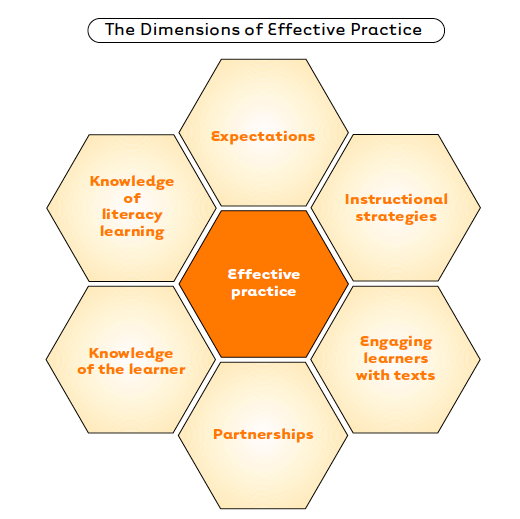
This diagram shows the different dimensions of effective literacy practice. During this reading professional development, we will be focusing mainly on the instructional strategies section of this diagram.
After the first session, we were asked to go away and observe the errors that children in our target group were making.We needed to think about what they were doing, why they might be make that error and the needs of this particular child to move them away from making these errors.
Here are some of the patterns I noticed in a group of children reading at 8-8.5 years.
- 6/6 children showed signs of missing the middle of longer words. These children need strategies to attend to and correctly decode medial blends.
- 4/6 children showed signs of not attending to the ends of words. These children need strategies to support them in attending to the ends of the words.
- 5/6 children seemed to lack confidence when it came to decoding. This showed in a number of ways. Sometimes these children froze on challenging words and did not attempt to use any strategy to decode. Some children read extremely quickly and did not correct errors (either add ins or omissions). 2/6 children often added words in or omitted words and did not go back to correct themselves.
In my next blog post about in-school reading PD, I will explain strategies and prompts we are learning to support each of these above errors that are happening for these children.
