Showing posts with label CImplement. Show all posts

Friday, 25 August 2023

Where am I up to as an "Action Researcher"

 Yesterday at our Kāhui Ako (CoL teachers) meeting, Russell Burt shared a thought invoking message which really supported pulliing me back into the reality that research as a teacher isn't going to look the same as research you may do in a university. We are, what he called, "Action Researchers." It is important in our jobs as teachers that if we find something that is working, we don't withhold this from other children (as you might do with a 'control' group in other forms of research). If something works, why wouldn't we give the opportunity to ALL students!? 

I am in a position where, since I am not in a classroom, I am not in a position to see a whole class of children. However, I am seeing a group of 14 children for an hour a week. These children are all getting equal opportunities in what they get when they come to see me.

Russell's korero made me ask myself whether what I am doing is beneficial to the children in front of me. My answer to this question is, YES. I believe that what I am doing is supporting these children with confidence and acceleration of their maths learning. I am using a strategy which is known to support acceleration for children in reading in our Manaiakalani schools: Mileage. Mileage in reading refers to giving the children lots of opportunities to read. Mileage in the maths sense, and with my inquiry group looks like the students being given lots of opportunities to apply their understanding in a variety of ways.

Is 'believing' this really enough? No. As teachers, we still need evidence to show that what we are doing is benefiting the children. In our meeting yesterday, I realised that I had such a focus on ensuring I had good pre and post data, that I hadn't put much thought into the formative assessment and data gathering throughout the process.

So how am I going to do this?

From now, I am going to make sure I gather up the work that each child is doing from week-to-week. This will support me in knowing whether there is an improvement in how students are solving the problems and showing their working compared to earlier in the intervention.

Monday, 29 August 2022

Roaming Videographers Feedback/Survey Responses

 The children who filming at sports events last week have now given feedback and responses to their experience. I have compiled the responses here:


Of the three children who filmed for the Matariki Day celebration, all felt they enjoyed filming a sports event more than filming at the Matariki Day.

Some things that children felt they got better at included:

-Learning how to use the camera cover during rain.
-Felt they got more confident each time they recorded.

Some children went to the events by themselves while others went as a buddy. Responses were positive for all children, despite whether they were by themselves or with a buddy:

- "I felt good by myself. I felt like I needed to work independently."
- "We were able to record games with not many complaints or arguments."
- "He was a good buddy with recording was because he helped me a lot with recording and he was very fun videoing with."


The responses from children who went out to sports events as videographers was really positive. This can be seen in the graph above. All children came back feeling that they had a positive experience. Reasons for this included:

- "I loved it! but I got soaking wet."
- "It was a good experience because I came out of my comfort zone and it was just a lot different."
- "Because I loved videoing them playing [sport] and watching how good they are."
- "I enjoyed it because recording them was fun. I thought I got some very good shots..."

I feel that these responses couldn't be better! The children's written responses are all positive and enthusiastic.

Of these four children, one was happy sticking to being a videographer. The other three all expressed interest in giving other news roles a go too. None of the children said they didn't want to be doing it. I feel that this is a really good indication that they are feeling more confident through being videographers.


Monday, 22 August 2022

Videography experience - Self Assessment/ Survey

 Today I created a survey for children to fill out after being a videographer at an out-of-school sporting event. We have 3 events this week so it will be really interesting to see how they get on and find the experience! 

The survey I have created is quite open-ended to allow the children to tell me what they have got out of the experience.

Friday, 19 August 2022

How will I collect information about implementation of changed practices/intervention?

 Hypothesis: If a less experienced classmate is supported by a more experienced classmate to learn a new skill, then their confidence in this skill will begin to develop. Confidence will begin improving in this skill as well as in other areas of school and life once they are out making decisions for themselves as members of the PENN (school news) crew. 

Inquiry Question: How does confidence of children improve by being given leadership roles as part of the school news team?

This is my second year in the Creative Space role. Last year, a lot of time was spent in Lockdown and when we were at school, we had to run things a bit differently. We were fortunate to have some sports competitions throughout the year. Last year, I relied on children who came to me expressing an interest in being videographers for sports tournaments. I also relied on children who had previously been presenters on PENN news. I worked with a small number of keen year 5 children to begin training them up as news presenters. 

This year, I began by utilising the same children who I had as my PENN crew last year. I had two keen year 7 children who expressed an interest in being videographers for sporting events. I had two keen year 8 children who expressed an interest in being videographers for assembly.

More recently, I have begun implementing a different approach. In the first half of my inquiry, I have identified a target group of children whose confidence I want to develop through being members of the PENN crew. These children are unlikely to be children who would step forward and ask to be given an opportunity like this. Instead, I am encouraging them to step into this role.

During the first half of this term, I have begun transitioning towards these target learners being the regular PENN videographers and photographers. One of these children has even stepped forward to give presenting a go!

During the final term and a half of this year, I will try to give these children as many opportunities as possible. I want them to see themselves as the PENN roaming videographers and photographers.

I will create blog post summaries of these experiences. It will be essential that I gather self-assessment data from the children after these experiences as I am not present with the children when they go out and video at sports events.

Other data that would be useful to gather will be to create a rubric to mark the quality of the footage that the children video. This will be important to make any comparisons in the quality of what they produce between now and the end of the year.

Restating my inquiry question and chain of events/ theory of action

Hypothesis: If a less experienced classmate is supported by a more experienced classmate to learn a new skill, then their confidence in this skill will begin to develop. Confidence will begin improving in this skill as well as in other areas of school and life once they are out making decisions for themselves as members of the PENN (school news) crew. 

Inquiry Question: How does confidence of children improve by being given leadership roles as part of the school news team?

Monitoring Progress (Assessment):

- Self confidence survey (see previous blog post and graphs)
- Anecdotal notes of children's confidence (from past teachers)
- Empowerment and Agency progression


Chain of Events (What I have done so far):


Chain of Events (What I will do next):

Tuesday, 9 August 2022

Updating my Class Site for the PENN crew roles

 I realised when assessing my teaching that I could be adding more to my class site to explain the roles that are available for the PENN crew.

I have begun adding to my class site so interested children can explore and find what News Roles may interest them:

The next step could be have the more skilled children make promotional movies to encourage other children to join up. They could mention such things as:

- What they love about their role
- What they learn or have learned in their role
- The great opportunities they have had in their role


Inquiring into my teaching practice

Hypothesis:

If a less experienced classmate is supported by a more experienced classmate to learn a new skill, then their confidence in this skill will begin to develop. Confidence will begin improving in this skill as well as in other areas of school and life once they are out making decisions for themselves as members of the PENN (school news) crew. 

What specific aspects of my current teaching are relevant to my hypothesis:

How am I teaching the more experienced classmate how to follow the values of the Tuakana Teina approach?

- Ako (learning/teaching)

- Manaakitanga (caring/uplifting each other)

- Rangatiratanga (uplifting students)

- Whanaungatanga (relationships)

- Tuakana Teina (apprentice-expert)

At what point do I as the teacher let the less experienced classmate start having more independence from their more experienced peer?

What is my role in this if the more experienced peer is taking on the 'teaching' role?

Formative information about your current strengths and areas for development:

Student voice (also in previous blog post):

Findings: Three children felt confident with knowing how to tell their teacher that they needed help. Four children felt that their confidence with this dropped compared to their primary responses. I'm not entirely sure for the reason for this however, it could result in the fact that in a Tuakana Teina relationship, the more skilled peer is like their 'teacher' and my role as the teacher was to step back from that "traditional" role. The children need to be seeing their peer as their teacher in this pedagogical approach which may still feel slightly uncomfortable to the children.

Practices which are currently implemented to support the hypothesis:

I was fortunate enough to have a whole day with my target group and their more skilled peers during our recent Matariki day. However, what practices am I implementing for general day to day improvement?

- Daily PENN crew - photography, video editing & presenting, studio technicians

During the daily PENN session, I teach children skills for developing their photography, video editing and presenting.
Presenters come in at 8am, open the script and rehearse before their turn to present.  I give the presenters in the moment support and tips based on their own individual needs.
Photographers get opportunity to develop their skills learned through Creative Space. I give them feedback on their photos on their return, explaining what makes their photos good.
Video editors get autonomy to learn how to transfer files between SD card and iMac. They also learn editing skills through iMovie.
Studio technicians set up the studio (lights, green screen etc).

- Sports events - Videographers and Photographers

Students attend sports event with video camera and still camera. This is a challenging area as I cannot attend the sports event with these children to teach them new skills and techniques. 

What changes can I make to my practice?

Currently, there is no implementation of a weekly training time for the children who are photographers and videographers. This is something I should definitely be implementing to explicitly encourage confidence for these children. This could be a before school on Friday session (since I don't run PENN on this day) OR a weekly lunchtime session (where we go and film sports trainings to learn skills). 

What do I need to do to implement this?

Videographers lunchtime club - Meeting together regularly to learn the skills of videography and photography.

More mileage of videography and photography for these children.

How can I measure changes to my practice?

I will measure changes to my practice by:
- Continuing to gather student voice about how students feel they can ask for help.
- Making a comparison of the interventions and implementations that I have added during the year.


Monday, 1 August 2022

How did the children respond after the first opportunity to be videographers?

 After the group of children had an opportunity to be videographers at our school Matariki Day alongside more skilled peers (Tuakana Teina), the children filled in a similar survey to their primary survey. I was interested to see if their levels of self confidence altered after just one opportunity to be videographers. 

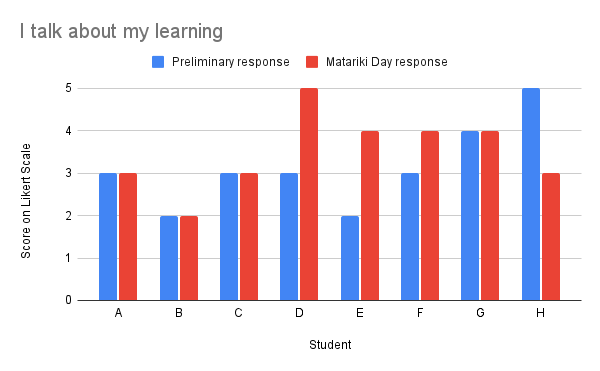
Here are the comparisons of the students responses between the first survey and the second survey:

Findings: All but one child either kept the same level of confidence or improved in their responses to this question.

Findings: All but one child either kept the same level of confidence or improved in their responses to this question.

Findings: Interestingly, this question gave quite a mixed bag of responses. One child remained with the same level of confidence. Four children's confidence levels improved. Three children's confidence levels dropped.

Findings: Two children felt more nervous being given this opportunity. One child's levels of nervousness remained the same. Five children's levels of nervousness dropped once doing the videography.

Findings: Two children levels of confidence remained the same when it came to speaking. Only one child felt less confident with their speaking. Five children felt more confidence with their speaking during this experience.

Findings: Four children were consistent with how they felt about their ability to talk about their learning. Three children felt their ability improved. One children felt their ability dropped.

Findings: Three children felt confident with knowing how to tell their teacher that they needed help. Four children felt that their confidence with this dropped. I'm not entirely sure for the reason for this however, it could result in the fact that in a Tuakana Teina relationship, the more skilled peer is like their 'teacher' and my role as the teacher was to step back from that "traditional" role. The children need to be seeing their peer as their teacher in this pedagogical approach which may still feel slightly uncomfortable to the children.

Findings: All but one child felt that their confidence and ability to let the other person speak either remained the same or improved. 

Findings: Six children remained highly confident with listening to their group mates' ideas. Two children felt this confidence dropped slightly with this.

These findings suggest that these children are going to need longer implementing use of videography for the school news, to improve their confidence. I hypothesise that confidence will begin improving once they are out making decisions for themselves as members of the PENN (school news) crew. 

Monday, 27 June 2022

Beginning implementation

 Last week, I had the perfect opportunity to implement my change in practice. We had a Matariki celebration day where I had a whole day to focus on capturing the day across the school! I created five groups of 3 students who worked in teams to capture the learning from the day for their allocated team. In each group, there was an 'expert' (a child who had already done some videography and editing) and two students who were to learn the skill.

The day was a great success! The groups talked lots, there was an instant improvement in confidence from the students who were learning the skill (as well as the student who was teaching the skill) and every group managed to film and edit a movie to get a finished product. From my point of view, I noticed the improvement in confidence through:

- Laughing, smiling and talking
- Focusing on the task
- Sharing of ideas
- Taking turns
- Asking questions

It is going to be important to find out from the children what the positive's were for them from this one day of Tuakana Teina. Today I am going to construct a survey to get feedback from the children about the day.

Thursday, 5 August 2021

Collecting information about implementation of my changed practices/intervention

Changed practice/intervention: Providing children with prompts/scaffolds to support speaking and presenting to encourage use of language.

How am I going to record implementation of this?

In a spreadsheet, I will record information every time I use the new tool. 

Here is an example:

Date: 5.08.21
Task: How does a Long Jumper's body move?
Speaking & Presenting Opportunity: Children spent time researching how the body of different athletes' bodies move. They had to think about the skeletal system and muscular system. In response to this, each child was given a unique prompt card which they had to respond to at the end of the session.
Time spent on new intervention: Children were given a unique prompt cards 20 minutes before they were to present to the class whilst they were still participating in the small group research task. 15 minutes of sharing through speaking and presenting.

Restating my Inquiry Question and Chain of Events

We are now half way through the year. In this post, I am going to restate my inquiry question to ensure I am still on track with my inquiry focus this year.

Inquiry Question: How can I change my teaching to support oral language progression towards the level of language which children can comprehend when reading?

Inquiry Goals: To improve oral language.

To reduce the disparity between the level of oral language and vocabulary used and the level of language and vocabulary they can read and recognise in written texts. To increase confidence when speaking and presenting.

Challenge: There is a disparity between the level of oral language and vocabulary which the year 5-6 extension children use and the level of language and vocabulary they can read and recognise in written texts.

Hypothesis: Giving children many opportunities to speak in front of each other (through sharing and presenting their ideas and learning within a small and a larger group), with the support of prompts and scaffolds will improve their confidence to speak and therefore improve their use of oral language.


Thursday, 29 July 2021

Implementation of a new tool into my practice

This term, I have begun implementing my new tool for the year 5&6 extension class. Using a range of conversational and discussion prompts from online, I have made a set of speaking prompts for the children. During each session with me, the children will be given a laminated card with a prompt. Their job is to respond to the work from the session using the prompt they have been given. This could be in response to a video they have watched, a discussion point or a text they have read, for example. 

From today, I would like to start giving them their prompt at the beginning of the session so they have a longer amount of time to prepare their response. We will finish each session 10 minutes before the end of the day so the children can share their responses. 

The initial implementation of this tool has been really successful. The children find the prompts useful and they appear much more confident when they have the prompt to support them in speaking and presenting. Here are copies of the prompts:


I have had discussions with a year 2 teacher at school who really liked the idea and thought her year 2 children could benefit from a similar approach. This began me thinking about how we could adapt the design for different age groups.

Thursday, 5 November 2020

The Concept Box: Adapted into a group reading lesson

Today I incorporated Peter Worley's The Concept Box framework into a reading lesson. Below are the different sections of The Concept Box, the steps I took at each section and some responses from the children. 

1. I first had the children read the text silently to themselves. The text we read was Want Relief by Paul Mason (School Journal Level 3, May 2020). Some themes that appear through the text include survival, loyalty, resilience and responsibility. 

 2. Comprehension Stage: This stage of the Concept Box allows the children to discuss the text openly.

The children pair up to first discuss the text. I noticed that who children paired up with made a huge difference to the 1:1 discussions that were had. At this point of the lesson, the children were not openly sharing ideas - coming up with ideas appeared to be difficult for the children. This stage of The Concept Box really supported the children's confidence in sharing ideas and beginning to think about the meaning of the text.

Some of the comments made by the children: 

- "They thought the bird in the story was giving them clues."
- "I think the bird was giving memories about the ship they had been on."
- "I think I agree with ______ because it said something about a ship wreck. They may have gone to the cold island by crashing the ship. Bird may have given memories to create the small version of the boat. Like a message."
- "Is this story true or false?"
- "They needed fire because it was winter and it gave them warmth."
- "It was a cold island."

Concept Fishing: This stage scaffolds the children to begin thinking more critically about the text.

During this phase, children had to think of one word each to describe the story. Once everyone had shared, other words could then be shared.

Words the children came up with:

Remember
Memory
Survival
Scary
True
Stranded
Feelings
Emotions
Historic
Life
Eternity
Hope
Trust
Faithful
Struggle
Luck
Relief
Parrot

The children did a really good job of thinking critically about the text at this early level of the lesson. Interestingly, some responses still suggested a superficial level of thinking (scary, parrot).

Concept Funnelling and Explore Central Concepts: Narrow down the words to just 5 - supporting children to really think about which words best describe the situation in the text | Arguing for/against one of these words.

For the first time this year, I gave the pen over to one of the children so they were the ones in control of the choosing and eliminating of words. This small action made the discussion so much more rich. The child who I gave the pen to stepped up to lead, as did one of the other children who took it upon himself to lead votes when decisions were struggling to be made over particular words.

Here are some of the comments that were made by children in the discussion to reduce the number of words:

- "I agree that parrot shouldn't be there because it doesn't go deep enough."

- "Wait. You need to have a reason. You can't just take it out." - REALLY good argument.

- "Faithful is kind of like Trust. "I have faith in you/ I trust you." "

- "Keep stranded because they were stranded on an island."

- "Feelings is emotion so we only need to keep on. Let's have a vote."

It was awesome to see the kids who stepped up as leaders during this section. The children were having some very rich discussions.

- "0ooo, Hope is a good one."  -For this comment, I had to encourage the children to say WHY.

- "You need hope to survive."

A challenge I am going to have with including The Concept Box Framework into the classroom is the length of time it takes. We didn't get to the final part which is to have a really rich discussion for and against the 5 final words. However, the discussions we had in the section we got to were really rich and getting to this point would suffice if it was happening regularly. 

Thursday, 22 October 2020

The Concept Box: Session 4

Story: The Promise-Slippers (page 123-130, Once upon an if (Peter Worley)
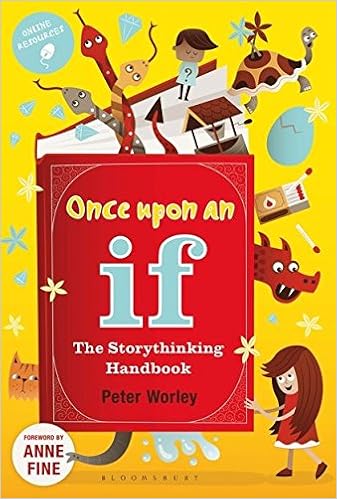
The Concept Box (Peter Worley) allows the children to begin thinking superficially and then scaffolds them into thinking deeper and deeper. I like to think of this not just like digging a hole, but like what you would find under a single ant hole - many intricate tunnels and mazes which may at first glance not seem meaningful to us, but which mean a lot to the colony of ants living there. On a trip to the UK several years ago, I visited the Chislehurst Caves in Kent. These caves are 30 metres under the town of Chistlehurst and date back as far as the years 1250-1274! If you were to just walk through the town of Chistlehurst, you would not even realise what was below the surface, however some people who were interested in what went below the surface have now found the caves which cover more than 6 hectares of land and have an incredibly rich history. They were even used as a sheltered city (with a chapel, hospital and accommodation) during WWII! We want our children to not just explore the 'town', but find the caves and cities which have been built below!

File:Shackleford Horse Digging Well.jpg

Chris Capeheart, CC BY-SA 2.0 <https://creativecommons.org/licenses/by-sa/2.0>, via Wikimedia Commons

Comprehension Stage: This stage of the Concept Box allows the children to discuss the text openly.

Here are some of the responses from the children:

- Why did the guy want someone to marry the son in 10 years? Why did he pick her, not another girl?
- The story is strange
- This is a narrative/ a myth. Answer(from another child): So it's fake?
- Is this real?
- It is fake because there are elves and warewolves.
- How would the girl have fit inside the tree? - The elf had a lot of stuff so needed a big tree.

The conversion kept going off in multiple directions - multiple conversations at once - and I had to keep pulling the children back to the one conversation. The discussions I heard tended to be about the superficial elements of the story (strange, elves, warewolves, size of the tree) and the children did not show evidence of being able to independently think deeper about the text. The only place where the children were close to doing this was when one child asked if the text was real or fake, however the responses to this were not thoughtful or deep (example, "It is fake because there are elves and warewolves").

Concept Fishing: This stage scaffolds the children to begin thinking more critically about the text.

What was the text about/ the moral?

Responses from the children:

- Always keep your promise
- If you don't keep your promise, bad things will happen - karma
- It was the slippers that made her have to keep the promise.
- Don't rely on objects - you don't need promise slippers to keep a promise.
- He's saying you don't need shoes to keep a promise.

Words shared:

- Decision
- Mythical
- Random
- Cringe
- Promise
- Relying/ reliable
- Focus
- Rough
- Mature/ maturity
- Neutral
- Magical
- Choices
- Opportunity
- Gullible
- Kindness
- Morals
- Values


From these responses, it can be seen that with scaffolding, the children were able to begin thinking deeper/ more critically about the text. However, when children had to narrow down the meaning of the text to one word, it can be seen that some children are still challenged with this concept of thinking more deeply (see responses such as, 'random', 'cringe', 'rough', 'magical'. Others, however, really begin to grasp the concept of thinking more deeply/critically (see responses such as, 'decision', 'relying', 'maturity', 'choices'.

It can also be seen that the process of the Concept Box really supports development of children's vocabulary. Vocabulary and Critically thinking come hand in hand.

Concept Funnelling: Narrow down the words to just 5 - supporting children to really think about which words best describe the situation in the text.

Decisions
Relying/reliable
Mature/maturity
Opportunity
Morals

Explore central concepts: Arguing for/against one of these words

Children's responses:

She had decisions to make.
I agree...decisions plays a big part of the story.
It wasn't her making the decisions but the slippers.
She was not forced to do it. She didn't have to wear the slippers. She could have said no.

Teacher: introduced the word, influence.

Wednesday, 23 September 2020

Student Voice: The Concept Box (Worley)

Today I gathered some student voice data in a google form about learning using 'The Concept Box' by Peter Worley. Below are the results from this. I have highlighted key words that were mentioned.

1. Explain what you have to do in this type of learning.

Key words from responses:
- Learn
- Words [Vocabulary]
- Making sense [Comprehension]
- Describe, explain
- Talk [Converse/Discuss]
- Think

2. How does this way of learning help you?

Key words from responses:
- Learn
- Words [Vocabulary]
- Listen
- Describe
- Understand [Comprehension]
- Deeper thinking [Critical thinking]

3. What do you get out of this way of learning? (Tick boxes)

Most popular responses:

- Introduced to new words (5/5 responses)
- Summarising - explaining the ideas in a text using a small number of words (5/5 responses)
- Adding more detail to my or others ideas (4/5 responses)
- Confidence (4/5 responses)
- Sharing ideas (4/5 responses)

What might this mean?

The children are implicitly aware that they are critically thinking. This is clear through the children's responses to their thoughts around the process of learning using 'The Concept Box' (Worley). Responses which include the concept of having to listen, explain, learn new vocabulary, making sense and thinking deeper suggest they are aware they are learning to think critically.

This is really positive for going forward with a focus on critical thinking. The next step will be to analyse the children's online blog posts and/or comments to see if this level of critical thinking is also visible in their online blogging. I then need to ask the question as to why or why not it is present in their online blogging. 

Wednesday, 16 September 2020

The Concept Box - Session 3

Text: The Patience of Trees (Once upon an If, by Peter Worley, page 118-122).

Once Upon an If: The Storythinking Handbook: Peter Worley: Bloomsbury  Education

During the free speech section of the comprehension stage of 'The Concept Box,' the children talked about freedom to do things. River - a statement was made about the river not being able to choose when to do things - Is this freedom?

During concept fishing, these words were brainstormed regarding the story:

Control
Weather
Determination
Freedom
Unfair
Happiness
Jealous
Wisdom
Mather-nature
Believing
Possibilities
Problems
Wishing
Movement
Gust
Friendship
Ability
First step
Misfortune
Courage
Confidence
Strength

During concept funnelling, the children reduced these words to the following words:

- Control - this was removed because they can't control themselves. It goes with freedom. The ones who were 'free' also were being controlled. What does this mean?
- Happiness
- Friendship
- Ability- isn't this a bit like control and freedom?
- Courage
- Confidence
- Strength - get rid of
- Determination - because little tree tried to get out when he had no hydration. Should be cut as was only in one part of the story.

Finally, as the children explored central concepts, the narrowed the above words down to these final words. Note: They added 'control' back in. A lot of the discussion revolved around the face that the characters in the story who appeared to have freedom were in fact being controlled. The word 'potential' was also added in to summarise a number of the words decided upon during concept funnelling.

- Control-freedom
- Potential (decided that covered ability, courage, confidence, determination)

The Concept Box - Session 2

Text: Matilda, the Fireless Dragon (Once upon an If, by Peter Worley, page 92).

Once Upon an If: The Storythinking Handbook: Peter Worley: Bloomsbury  Education

In today's session of 'The Concept Box' by Peter Worley, these are the words the children reached during the concept funnelling time. For some words, I have made notes with children's responses, comments or arguments.
 
Bravery - dragon was brave to fight the water monster. King was brave to ask dragon to help. I don't think he was brave to fight the monster. Dragon tricked the water monster. The princess was the brave one as she went to the dragon in the first place.
Stereotype - plays a big part in the story. Dragon didn't breathe fire but villagers believed he did.
Manipulation - I would say trick. | But trick is like manipulation.
Ignorant -
Slay
Annoying - not part of the story. | Only describes a character. |

During the exploration of central concepts, one of the children added in the word, 'unique.' His explanation for this was that she (the dragon) was unique because she didn't breathe fire. Also, the werewolf didn't have teeth so was also unique. Unique is like a stereotype. The children discussed how they are opposite.

Through doing a 'Concept Box' session once a week, I am noticing that the children are extremely capable of thinking for themselves and pulling deeper ideas and concepts out of the texts they read independent of the teacher. This is really positive as I develop the learning programme for these children who are reading to learn.