Thursday, 5 November 2020

The Concept Box: Adapted into a group reading lesson

Today I incorporated Peter Worley's The Concept Box framework into a reading lesson. Below are the different sections of The Concept Box, the steps I took at each section and some responses from the children. 

1. I first had the children read the text silently to themselves. The text we read was Want Relief by Paul Mason (School Journal Level 3, May 2020). Some themes that appear through the text include survival, loyalty, resilience and responsibility. 

 2. Comprehension Stage: This stage of the Concept Box allows the children to discuss the text openly.

The children pair up to first discuss the text. I noticed that who children paired up with made a huge difference to the 1:1 discussions that were had. At this point of the lesson, the children were not openly sharing ideas - coming up with ideas appeared to be difficult for the children. This stage of The Concept Box really supported the children's confidence in sharing ideas and beginning to think about the meaning of the text.

Some of the comments made by the children: 

- "They thought the bird in the story was giving them clues."
- "I think the bird was giving memories about the ship they had been on."
- "I think I agree with ______ because it said something about a ship wreck. They may have gone to the cold island by crashing the ship. Bird may have given memories to create the small version of the boat. Like a message."
- "Is this story true or false?"
- "They needed fire because it was winter and it gave them warmth."
- "It was a cold island."

Concept Fishing: This stage scaffolds the children to begin thinking more critically about the text.

During this phase, children had to think of one word each to describe the story. Once everyone had shared, other words could then be shared.

Words the children came up with:

Remember
Memory
Survival
Scary
True
Stranded
Feelings
Emotions
Historic
Life
Eternity
Hope
Trust
Faithful
Struggle
Luck
Relief
Parrot

The children did a really good job of thinking critically about the text at this early level of the lesson. Interestingly, some responses still suggested a superficial level of thinking (scary, parrot).

Concept Funnelling and Explore Central Concepts: Narrow down the words to just 5 - supporting children to really think about which words best describe the situation in the text | Arguing for/against one of these words.

For the first time this year, I gave the pen over to one of the children so they were the ones in control of the choosing and eliminating of words. This small action made the discussion so much more rich. The child who I gave the pen to stepped up to lead, as did one of the other children who took it upon himself to lead votes when decisions were struggling to be made over particular words.

Here are some of the comments that were made by children in the discussion to reduce the number of words:

- "I agree that parrot shouldn't be there because it doesn't go deep enough."

- "Wait. You need to have a reason. You can't just take it out." - REALLY good argument.

- "Faithful is kind of like Trust. "I have faith in you/ I trust you." "

- "Keep stranded because they were stranded on an island."

- "Feelings is emotion so we only need to keep on. Let's have a vote."

It was awesome to see the kids who stepped up as leaders during this section. The children were having some very rich discussions.

- "0ooo, Hope is a good one."  -For this comment, I had to encourage the children to say WHY.

- "You need hope to survive."

A challenge I am going to have with including The Concept Box Framework into the classroom is the length of time it takes. We didn't get to the final part which is to have a really rich discussion for and against the 5 final words. However, the discussions we had in the section we got to were really rich and getting to this point would suffice if it was happening regularly. 

Thursday, 22 October 2020

The Concept Box: Session 4

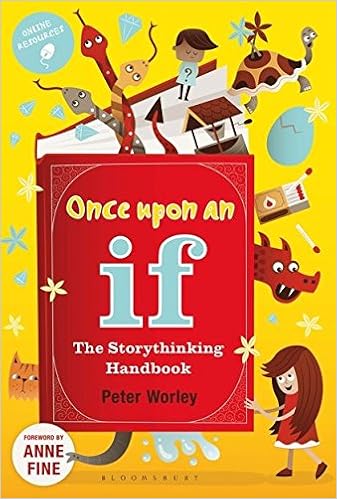
Story: The Promise-Slippers (page 123-130, Once upon an if (Peter Worley)

The Concept Box (Peter Worley) allows the children to begin thinking superficially and then scaffolds them into thinking deeper and deeper. I like to think of this not just like digging a hole, but like what you would find under a single ant hole - many intricate tunnels and mazes which may at first glance not seem meaningful to us, but which mean a lot to the colony of ants living there. On a trip to the UK several years ago, I visited the Chislehurst Caves in Kent. These caves are 30 metres under the town of Chistlehurst and date back as far as the years 1250-1274! If you were to just walk through the town of Chistlehurst, you would not even realise what was below the surface, however some people who were interested in what went below the surface have now found the caves which cover more than 6 hectares of land and have an incredibly rich history. They were even used as a sheltered city (with a chapel, hospital and accommodation) during WWII! We want our children to not just explore the 'town', but find the caves and cities which have been built below!

File:Shackleford Horse Digging Well.jpg

Chris Capeheart, CC BY-SA 2.0 <https://creativecommons.org/licenses/by-sa/2.0>, via Wikimedia Commons

Comprehension Stage: This stage of the Concept Box allows the children to discuss the text openly.

Here are some of the responses from the children:

- Why did the guy want someone to marry the son in 10 years? Why did he pick her, not another girl?
- The story is strange
- This is a narrative/ a myth. Answer(from another child): So it's fake?
- Is this real?
- It is fake because there are elves and warewolves.
- How would the girl have fit inside the tree? - The elf had a lot of stuff so needed a big tree.

The conversion kept going off in multiple directions - multiple conversations at once - and I had to keep pulling the children back to the one conversation. The discussions I heard tended to be about the superficial elements of the story (strange, elves, warewolves, size of the tree) and the children did not show evidence of being able to independently think deeper about the text. The only place where the children were close to doing this was when one child asked if the text was real or fake, however the responses to this were not thoughtful or deep (example, "It is fake because there are elves and warewolves").

Concept Fishing: This stage scaffolds the children to begin thinking more critically about the text.

What was the text about/ the moral?

Responses from the children:

- Always keep your promise
- If you don't keep your promise, bad things will happen - karma
- It was the slippers that made her have to keep the promise.
- Don't rely on objects - you don't need promise slippers to keep a promise.
- He's saying you don't need shoes to keep a promise.

Words shared:

- Decision
- Mythical
- Random
- Cringe
- Promise
- Relying/ reliable
- Focus
- Rough
- Mature/ maturity
- Neutral
- Magical
- Choices
- Opportunity
- Gullible
- Kindness
- Morals
- Values


From these responses, it can be seen that with scaffolding, the children were able to begin thinking deeper/ more critically about the text. However, when children had to narrow down the meaning of the text to one word, it can be seen that some children are still challenged with this concept of thinking more deeply (see responses such as, 'random', 'cringe', 'rough', 'magical'. Others, however, really begin to grasp the concept of thinking more deeply/critically (see responses such as, 'decision', 'relying', 'maturity', 'choices'.

It can also be seen that the process of the Concept Box really supports development of children's vocabulary. Vocabulary and Critically thinking come hand in hand.

Concept Funnelling: Narrow down the words to just 5 - supporting children to really think about which words best describe the situation in the text.

Decisions
Relying/reliable
Mature/maturity
Opportunity
Morals

Explore central concepts: Arguing for/against one of these words

Children's responses:

She had decisions to make.
I agree...decisions plays a big part of the story.
It wasn't her making the decisions but the slippers.
She was not forced to do it. She didn't have to wear the slippers. She could have said no.

Teacher: introduced the word, influence.

Wednesday, 23 September 2020

Student Voice: The Concept Box (Worley)

Today I gathered some student voice data in a google form about learning using 'The Concept Box' by Peter Worley. Below are the results from this. I have highlighted key words that were mentioned.

1. Explain what you have to do in this type of learning.

Key words from responses:
- Learn
- Words [Vocabulary]
- Making sense [Comprehension]
- Describe, explain
- Talk [Converse/Discuss]
- Think

2. How does this way of learning help you?

Key words from responses:
- Learn
- Words [Vocabulary]
- Listen
- Describe
- Understand [Comprehension]
- Deeper thinking [Critical thinking]

3. What do you get out of this way of learning? (Tick boxes)

Most popular responses:

- Introduced to new words (5/5 responses)
- Summarising - explaining the ideas in a text using a small number of words (5/5 responses)
- Adding more detail to my or others ideas (4/5 responses)
- Confidence (4/5 responses)
- Sharing ideas (4/5 responses)

What might this mean?

The children are implicitly aware that they are critically thinking. This is clear through the children's responses to their thoughts around the process of learning using 'The Concept Box' (Worley). Responses which include the concept of having to listen, explain, learn new vocabulary, making sense and thinking deeper suggest they are aware they are learning to think critically.

This is really positive for going forward with a focus on critical thinking. The next step will be to analyse the children's online blog posts and/or comments to see if this level of critical thinking is also visible in their online blogging. I then need to ask the question as to why or why not it is present in their online blogging. 

Wednesday, 16 September 2020

The Concept Box - Session 3

Text: The Patience of Trees (Once upon an If, by Peter Worley, page 118-122).

Once Upon an If: The Storythinking Handbook: Peter Worley: Bloomsbury  Education

During the free speech section of the comprehension stage of 'The Concept Box,' the children talked about freedom to do things. River - a statement was made about the river not being able to choose when to do things - Is this freedom?

During concept fishing, these words were brainstormed regarding the story:

Control
Weather
Determination
Freedom
Unfair
Happiness
Jealous
Wisdom
Mather-nature
Believing
Possibilities
Problems
Wishing
Movement
Gust
Friendship
Ability
First step
Misfortune
Courage
Confidence
Strength

During concept funnelling, the children reduced these words to the following words:

- Control - this was removed because they can't control themselves. It goes with freedom. The ones who were 'free' also were being controlled. What does this mean?
- Happiness
- Friendship
- Ability- isn't this a bit like control and freedom?
- Courage
- Confidence
- Strength - get rid of
- Determination - because little tree tried to get out when he had no hydration. Should be cut as was only in one part of the story.

Finally, as the children explored central concepts, the narrowed the above words down to these final words. Note: They added 'control' back in. A lot of the discussion revolved around the face that the characters in the story who appeared to have freedom were in fact being controlled. The word 'potential' was also added in to summarise a number of the words decided upon during concept funnelling.

- Control-freedom
- Potential (decided that covered ability, courage, confidence, determination)

The Concept Box - Session 2

Text: Matilda, the Fireless Dragon (Once upon an If, by Peter Worley, page 92).

Once Upon an If: The Storythinking Handbook: Peter Worley: Bloomsbury  Education

In today's session of 'The Concept Box' by Peter Worley, these are the words the children reached during the concept funnelling time. For some words, I have made notes with children's responses, comments or arguments.
 
Bravery - dragon was brave to fight the water monster. King was brave to ask dragon to help. I don't think he was brave to fight the monster. Dragon tricked the water monster. The princess was the brave one as she went to the dragon in the first place.
Stereotype - plays a big part in the story. Dragon didn't breathe fire but villagers believed he did.
Manipulation - I would say trick. | But trick is like manipulation.
Ignorant -
Slay
Annoying - not part of the story. | Only describes a character. |

During the exploration of central concepts, one of the children added in the word, 'unique.' His explanation for this was that she (the dragon) was unique because she didn't breathe fire. Also, the werewolf didn't have teeth so was also unique. Unique is like a stereotype. The children discussed how they are opposite.

Through doing a 'Concept Box' session once a week, I am noticing that the children are extremely capable of thinking for themselves and pulling deeper ideas and concepts out of the texts they read independent of the teacher. This is really positive as I develop the learning programme for these children who are reading to learn.

Wednesday, 2 September 2020

The Concept Box (Peter Worley) - Attempting this in class

Today I trialled using the Concept Box, a teaching strategy which comes from Peter Worley's book, Once upon an if. It was a huge success! The children were engaged and I saw a vast difference in the amount of critical thinking occurring. We trialled it using the poem, The Square that Didn't Fit In, on page 172 of Once upon an if. Here are some of my observations/ notes from the learning experience. I have broken it up into the different elements of the Concept Box.

Comprehension Stage
Here are some of the comments that children made and questions they asked in this open conversation about the text:

- Couldn't the monster eat small circles? They'd fit.
- How did the monster get fooled?
- There are those crackers called shapes which come in lots of different shapes and sizes.
- Started talking about which shape they would like to be.

Lots of questions were asked by the children during this comprehension stage. I need to remind myself to sit back and observe rather than take part in the conversation.

Concept Fishing
Most children found this section of the Concept Box difficult. One child did a really good job of describing text however used a lot of detail. Here are the words they came up with to describe the text:

Different
Dumb
Confused
Personality
Confident
Life
Circle
Feeling
Purpose
Inside-out
Normal


Concept Funnelling
I got a bit confused at this point and combined this section with the final Exploring central concepts section. Next time, I will work at splitting these two sections up.  I need to remember that this section gives children a chance to share which one word they think is the best and why. Once have shared 5 words, move onto the last section.

The children gave some great explanations for and against the above words. We then filtered it down to:

Different
Normal
Personality
Purpose
expressing
feeling

 The children found it really trick to get the list down to five words. They finally decided to take 'feeling' out as they felt 'expressing' incorporated 'feeling.'

Next time, I will do a better job of splitting up Concept Funnelling and Exploring central concepts.

Thursday, 27 August 2020

Manaiakalani Create Staff Meeting

Several weeks ago, we had a Manaiakalani Create Staff Meeting. During this meeting, we each got to attend two workshops about creating digitally. Danni Stone and I ran a workshop on creating a times table quiz using scratch.

Coding is great in maths because of computational thinking - a skill that’s in both the maths and digital technologies curriculum. Creating a maths quiz in scratch is a great way to empower the students, encouraging sharing of learning and ako (teaching others).

Learning from this workshop (or these slides below) could be used by teachers to create a quiz as an independent task for the children to work on OR a task where the children create the game.

This was a great opportunity to share some knowledge, learn from others and to show some of the learning from the classroom.

Here are the slides from our workshop: